
India's mergers and acquisitions (M&A) activity cooled in the second quarter of 2025-26 (Q2FY26), with deal value falling to $26.26 billion from $29.04 billion a year ago, according to Bloomberg data.

The Softbank-backed company has set a price band of Rs 72 to Rs 76 per share for the maiden share sale and is expected to test the appetite for new-age loss-making companies.

'While investors need to be prepared for making some losses, they should not lose big money chasing euphoria amid fear of missing out.'

Naukri.com-parent Info Edge, whose long-term bets on Indian startups ranging from Zomato to Policybazaar yielded blockbuster returns, has been named the country's most successful venture investor, cementing its reputation as a standout player in India's startup ecosystem. The firm, helmed by Sanjeev Bikhchandani - often referred to as India's Warren Buffett- invested a total capital of Rs 3,959.16 crore across platforms over the last one and a half decades.

Despite markets turning volatile, share sale activity at India Inc has surged to its highest level in five months. So far in March, promoters, strategic investors and other large shareholders have been able to offload shares worth more than Rs 33,000 crore-the most since November-defying uncertain market conditions. Both the Sensex and the Nifty are on course to post their fourth straight monthly loss amid headwinds, such as interest rate tightening by the US Federal Reserve and the global banking crisis.

Stock exchanges have intensified vigil on Small and Medium Enterprise (SME) listings by mandating more comprehensive financial disclosures and enhanced monitoring of utilisation of issue proceeds from investment bankers, amid rising instances of dubious practices. Bourses - responsible for vetting initial public offering (IPO) documents and granting approvals to SMEs - have tightened norms in recent weeks with further measures planned for new filings to safeguard investor interests, sources said.
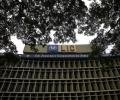
The government will launch the mega public offer of LIC by March and file draft papers with market regulator Sebi by the end of this month, an official said. Finance Minister Nirmala Sitharaman had last week reviewed the progress of the initial public offering (IPO) of Life Insurance Corporation (LIC) in a meeting with top officials of the ministry. The official said the September 2021 quarter financials of LIC are getting finalised as well as fund bifurcation is in progress.

India witnessed 22 initial public offers worth over $2.5 billion in the first three months of 2021 amid "high momentum" in the country's capital markets and the trend is likely to stay bullish in the current quarter also, according to a report. Leading consultancy EY India's IPO (Initial Public Offer) report released on Wednesday showed that consumer products and retail, diversified industrial products, automotive and transportation were the most active sectors in terms of the number of IPOs in the 2021 first quarter. The IPOs include both in the main as well as SME (Small and Medium Enterprise) markets.

In a bid to ease compliance towards companies planning public offers (IPOs), the Securities and Exchange Board of India (Sebi) has notified norms that open more avenues to meet the minimum promoters' contribution (MPC). The market regulator has permitted promoter group entities and non-individual shareholders to contribute to the mandated promoters' contribution in the case of a shortfall without being identified as a promoter.

Buoyed by the success of secondary market, IPO market set to see high action

Layoffs, corporate restructuring, governance and most importantly profitability: The 14 Indian startups that plan IPOs this year are pulling out all the stops to ensure successful market debuts.

Food delivery and quick-commerce major Swiggy, which is coming out with its initial public offering (IPO) on Wednesday, is seeking a valuation of about $11.3 billion. The Bengaluru-based company is aiming to garner Rs 11,327 crore from the IPO, which will comprise a fresh issue of shares worth Rs 4,499 crore along with an offer for sale (OFS) of Rs 6,828 crore. Swiggy has set a price band of Rs 371 to Rs 390 per share for its maiden public issue.

The initial public offerings (IPOs) by small and medium enterprises (SMEs) hit a new high in 2023-2024 (FY24). In this financial year, data from the Prime Database showed that 190 companies raised Rs 5,579 crore through the SME IPO route. This financial year's tally bettered the fundraising in the previous financial year when 125 companies raised Rs 2,235 crore.

Bengaluru-headquartered electric two-wheeler manufacturer Ather Energy is all set to file its draft red herring prospectus within the second week of September to the Securities Exchange Board of India (Sebi) for its maiden initial public offering (IPO), in which it is expected to raise over $450 million. On Tuesday, the fourth-largest electric two-wheeler maker in the country by volume raised Rs 600 crore from its existing investor, the National Investment and Infrastructure Fund (NIIF), catapulting itself into a unicorn with a valuation of $1.3 billion.

'Expect India to keep doing well irrespective of geopolitics.'

A total of 49 companies raised Rs 81,615 crore in Samvat 2077, more than the preceding four years and almost double the amount raised in the previous year. Samvat 2078 appears even more promising with mega issues of Paytm and Life Insurance Corporation (LIC) of India. However, Paytm's record could be short-lived as state-owned LIC is planning to launch a Rs 1-trillion IPO by March 2022.

FOMO-driven investing is reshaping India's stock market. Swati Saxena explains how social media hype fuels risky bets and how to protect your wealth.
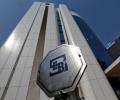
The Securities and Exchange Board of India's (Sebi's) proposal to re-introduce "hard underwriting" is seen as step to boost India's moribund initial public offering (IPO) markets. The regulator has proposed that in case an IPO fails to garner full subscription, the investment banker or a third-party can buy the unsubscribed shares. This practice was common during fixed-price issues prior to 1999. However, under the new book building regime, underwriting is allowed only to the extent of shortfall due to technical rejection of bids - this is referred to as "soft underwriting" and is rarely invoked.
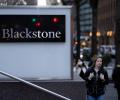
US-based private equity firm Blackstone and Bengaluru-based real estate developer Sattva Group filed the draft initial public offer (IPO) papers for India's biggest real estate investment trust (Reit) named Knowledge Realty Trust to raise ?6,200 crore. The Reit will be the largest in India in terms of net operating income (NOI) and gross assets value (GAV).

Shyam Metalics and Energy (SMEL) will end the over two-month drought in the initial public offering (IPO) market. The steelmaker will launch its Rs 909-crore offering soon. SMEL has pruned its IPO size from Rs 1,107 crore, with the promoters deciding to offload shares worth Rs 252 crore as against Rs 452 crore planned earlier. The company has priced its IPO between Rs 303 to 306 per share.
More than half a dozen companies will hit the market with their initial public offerings (IPOs) between now and the end of next week. The cumulative amount raised from these IPOs is expected to be around Rs 8,000 crore. Stationery products firm DOMS Industries and home financier India Shelter Finance's IPOs - of Rs 1,200 crore each - got off to a flying start on Wednesday (December 13), with the former garnering over six times the subscription and the latter getting 1.5 times subscribed.

'The country is a good test bed for enterprise adoption, but to scale rapidly, companies will need to look outside the country for customers.'

'I can sanction projects worth Rs 20 trillion annually as of today.' 'But my system is only capable of executing projects worth Rs 3 trillion to Rs 4 trillion.'

Shares of Hyundai Motor India Ltd, the Indian arm of South Korean automaker Hyundai, on Tuesday made a muted market debut and further fell by nearly 6 per cent against the issue price of Rs 1,960. The stock listed at Rs 1,931, reflecting a decline of 1.47 per cent from the issue price on the BSE. Later, the stock made some recovery and hit a high of Rs 1,968.80, up 0.44 per cent.
RailTel Corporation of India, Indigo Paints, Home First Finance Company, Indian Railway Finance Corporation, and Suryoday Small Finance Bank are among the companies looking to tap the market.

India and the US are expected to have smooth trade negotiations after US President Donald Trump and Indian Prime Minister Narendra Modi had a productive meeting during Modi's visit to the White House last month, Stephen A Schwarzman, chairman, chief executive officer, and co-founder of one of the world's largest alternative investment firms, Blackstone Group, said in Mumbai on Wednesday.

Quarterly earnings of corporates, trading activity of foreign investors and inflation data are the key factors that are expected to drive the momentum in the equity markets this week, analysts said.

The Tata Tech IPO will be the first from the Tata group since TCS listed its shares in 2004.

Patience can be rewarding. 'Post-listing, sanity often returns to valuations of newly-listed businesses within six to nine months. Buy then.'

The buzz in the IPO market continues with four companies launching their initial share sales this week to raise over Rs 14,628 crore collectively. This comes after four companies -- Devyani International, Krsnaa Diagnostics, Windlas Biotech and Exxaro Tiles-- launched their initial share-sales last week to mobilise Rs 3,614 crore. So far in the current fiscal, 16 companies have raised Rs 30,666 crore through IPOs against Rs 31,277 crore by 30 firms in the entire 2020-21. Going forward, market analysts expect the IPO environment to remain buzzing during the entire 2021-22.

'In case the El Nino pattern plays out negatively and/or the political situation becomes messy, we may see markets correcting and waiting for the situation to become clear by early/mid-2024.'

Ola Electric's initial public offering (IPO), of Rs 5,500 crore, is essentially aimed at ensuring the company maintain its top position in the electric two-wheeler segment, with incumbent players TVS and Bajaj Auto giving a fight to the number one player in market share. Most experts and competitors say the amount being raised is in line with the investment required to expand the electric-vehicle (EV) business. There are two discernible trends in the competitive electric two-wheeler market.
Initial share sales are set to dazzle the Dalal Street in 2022 too as companies are expected to garner up to Rs 1.5 lakh crore in the New Year, continuing with the bullish momentum after 2021 turned out to be the best IPO year in two decades for the Indian market. Excessive liquidity and increased retail investor participation ensured a persistent euphoria in the Initial Public Offer (IPO) space wherein companies mopped up more than Rs 1.2 lakh crore this year even as pandemic gloom shadowed the broader economy. In 2022, the higher amount of funds through the primary market will be largely driven by the mega IPO of state-owned Life Insurance Corp (LIC).
More cos could join the likes of Burger King and Antony Waste in giving listing another shot.

Electric two-wheeler company Ola Electric Mobility will float its initial public offering (IPO) on August 2, and a significant part of the proceeds will be used for capacity expansion of its cell manufacturing plant and revving up R&D. The initial share sale will conclude on August 6, and the bidding for anchor investors will open for a day on August 1, according to the red herring prospectus (RHP).
This year is set to be the third consecutive year when India's share of IPOs has fallen relative to the rest of the world.

Promoters' ownership in private listed companies declined to an eight-year low of 40.58 per cent as of June 30, 2025, following a net share sale worth Rs 54,732 crore during the quarter, according to data from primeinfobase.com, an initiative of PRIME Database Group.

'India is a very strategic geography. The business is growing over 37-38 per cent year-on-year.'

The Centre has set a steep divestment target of Rs 80,000 crore for 2018-19. In the first six months, it has managed to mop up less than Rs 10,000 crore.

After a prolonged winter, the Indian edtech sector seems to be witnessing some signs of a thaw. The sector has received $608.8 million of funding across 68 deals in 2024 so far - 153 per cent more than the $240.9 million across 106 deals during the same period last year - according to data from market intelligence platform Tracxn.
